
E-Commerce is Change the Future in 2026
E-Commerce: The Complete Guide to Online Business in 2026
Introduction to E-Commerce
E-commerce, also known as electronic commerce, refers to the buying and selling of goods and services through the internet. In simple words, whenever people purchase products online using a computer, mobile phone, or tablet, it is called e-commerce. Over the past two decades, e-commerce has grown rapidly and has become one of the most important parts of the global economy.
With the advancement of technology and the increasing use of the internet, businesses have moved from traditional stores to online platforms. Many companies now sell their products through online stores, websites, and mobile applications. Customers can browse products, compare prices, read reviews, and make purchases from the comfort of their homes.
Large companies like Amazon, eBay, and Alibaba Group have played a major role in the development and popularity of e-commerce worldwide. These platforms connect millions of buyers and sellers across the globe.
Today, e-commerce is not only limited to large businesses. Small businesses, startups, and even individual sellers can start their online stores using platforms such as Shopify and WooCommerce.
What is E-Commerce?
E-commerce is the process of conducting commercial transactions electronically over the internet. It includes activities such as:
- Online shopping
- Online payments
- Online auctions
- Internet banking
- Digital marketing
- Online ticket booking
In simple terms, if a product or service is bought or sold through the internet, it is part of e-commerce.
For example, when a customer orders clothes from an online store, pays through a digital payment system, and receives the product at home, the entire process is part of e-commerce.
History of E-Commerce
The concept of e-commerce started in the 1960s with electronic data exchange (EDI), which allowed companies to share business documents electronically.
However, modern e-commerce began in the 1990s with the rise of the internet. One of the first online marketplaces was created by Jeff Bezos when he launched Amazon in 1994 as an online bookstore.
Soon after, other platforms such as eBay appeared, allowing people to buy and sell items online through auctions.
Since then, e-commerce has evolved rapidly due to:
- Faster internet
- Smartphones
- Online payment systems
- Digital marketing
Today, billions of people around the world shop online regularly.
Types of E-Commerce
E-commerce can be divided into several types depending on the participants involved in the transaction.
1. Business to Business (B2B)
B2B e-commerce refers to transactions between two businesses. In this model, one company sells products or services to another company.
Example:
A manufacturer selling raw materials to a retailer.
Large platforms like Alibaba Group are popular for B2B e-commerce.
2. Business to Consumer (B2C)
B2C is the most common type of e-commerce. In this model, businesses sell products directly to customers through online stores.
Examples include:
- Amazon
- Flipkart
- Myntra
Customers can browse products, add items to the cart, and make payments online.
3. Consumer to Consumer (C2C)
In this type, individuals sell products directly to other individuals using online platforms.
Example platforms include:
- eBay
- OLX
People often sell used items such as furniture, electronics, and vehicles.
4. Consumer to Business (C2B)
In C2B e-commerce, individuals offer products or services to businesses.
For example:
- Freelancers offering services to companies
- Influencers promoting brands on social media
Platforms like Upwork allow freelancers to work with businesses online.
Features of E-Commerce
E-commerce has several unique features that make it different from traditional commerce.
1. Global Reach
Online businesses can reach customers all around the world without opening physical stores.
2. 24/7 Availability
E-commerce stores remain open 24 hours a day and 7 days a week.
3. Convenience
Customers can shop anytime and anywhere using their smartphones or computers.
4. Wide Product Variety
Online stores offer a large variety of products compared to physical stores.
5. Easy Payment Options
Customers can pay using different methods such as:
- Credit cards
- Debit cards
- Digital wallets
- Online banking
Advantages of E-Commerce

E-commerce provides many benefits to both businesses and customers.
1. Lower Business Costs
Online stores do not require expensive physical locations, which reduces operational costs.
2. Wider Customer Base
Businesses can reach customers worldwide through online platforms.
3. Easy Marketing
Businesses can promote products through digital marketing strategies such as:
- Search engine optimization
- Social media marketing
- Email marketing
Search engines like Google Search help customers find online stores easily.
4. Faster Buying Process
Customers can purchase products quickly without visiting physical stores.
5. Better Customer Experience
Online stores provide product reviews, recommendations, and easy return policies.
Disadvantages of E-Commerce
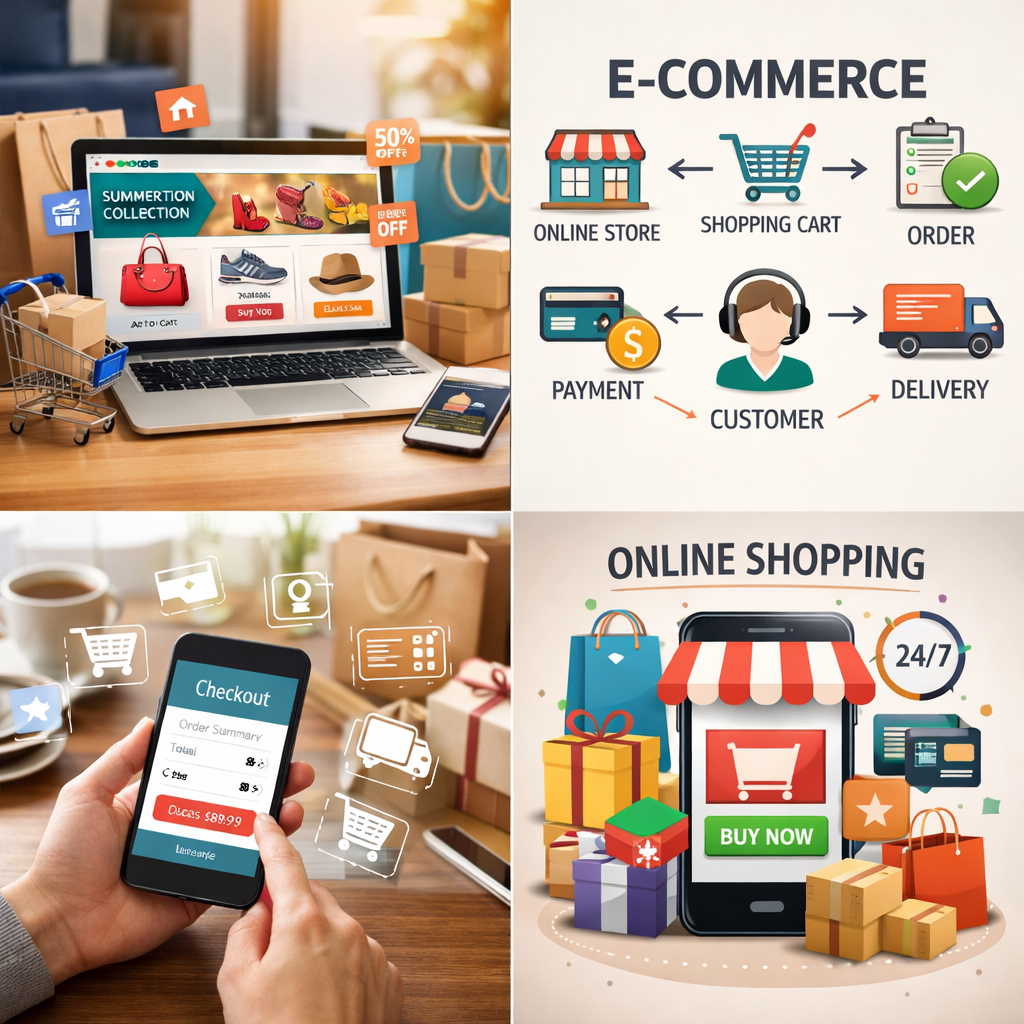
Although e-commerce offers many advantages, it also has some challenges.
1. Security Issues
Online transactions may face risks such as hacking and fraud.
2. No Physical Inspection
Customers cannot physically examine products before purchasing.
3. Delivery Delays
Shipping may take several days, especially for international orders.
4. Technical Problems
Website crashes or payment errors may affect customer experience.
Importance of E-Commerce in Modern Business
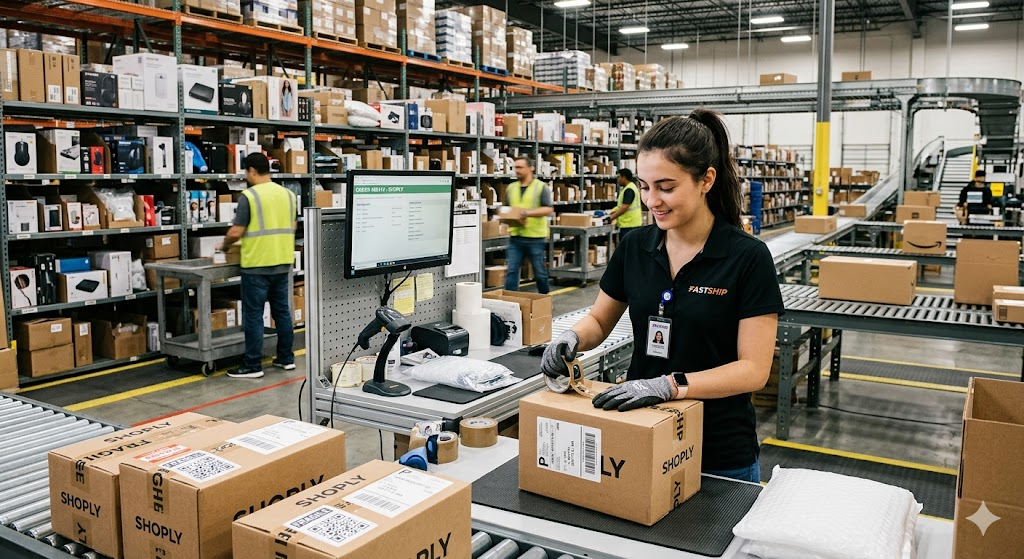
E-commerce has become an essential part of modern business strategies.
Companies that do not have an online presence may lose customers to competitors who sell online.
E-commerce helps businesses:
- Increase sales
- Reach global customers
- Reduce marketing costs
- Improve customer engagement
Many traditional businesses now combine offline and online selling strategies.
Role of Digital Marketing in E-Commerce
Digital marketing plays a major role in the success of e-commerce businesses.
Without proper marketing, customers may not find online stores.
Some popular digital marketing techniques include:
Search Engine Optimization (SEO)
SEO helps websites rank higher on search engines like Google Search.
Higher rankings mean more website visitors and potential customers.
Social Media Marketing
Businesses promote products on social media platforms such as:
- YouTube
These platforms allow brands to connect with customers directly.
Email Marketing
Businesses send promotional emails to customers about:
- New products
- Discounts
- Special offers
Paid Advertising
Online advertisements help businesses reach targeted audiences quickly.
E-Commerce Platforms
Many tools help businesses create online stores easily.
Shopify
Shopify is one of the most popular e-commerce platforms. It allows users to create professional online stores without coding.
WooCommerce
WooCommerce is a WordPress plugin used to build e-commerce websites.
Magento
Magento is a powerful e-commerce platform used by large businesses.
These platforms provide features like:
- Product management
- Payment gateways
- Inventory management
- Order tracking
Payment Systems in E-Commerce
Online payment systems allow customers to pay securely.
Common payment methods include:
- Credit cards
- Debit cards
- Net banking
- Digital wallets
Popular digital payment systems include:
- PayPal
- Google Pay
- PhonePe
These systems provide secure and fast transactions.
Future of E-Commerce
The future of e-commerce looks very promising due to technological innovations.
Some major trends include:
Artificial Intelligence
AI helps online stores recommend products based on customer behavior.
Mobile Commerce
More people now shop using smartphones.
Voice Shopping
Voice assistants like Amazon Alexa allow users to shop using voice commands.
Augmented Reality
Customers can visualize products before buying them.
Tips to Start an E-Commerce Business
Starting an e-commerce business is easier today than ever before.
Here are some steps to start:
- Choose a profitable product
- Select an e-commerce platform
- Create a professional website
- Add high-quality product images
- Use digital marketing strategies
- Provide good customer support
Consistency and quality service are the keys to success.
Conclusion
E-commerce has completely transformed the way people buy and sell products. It has created new opportunities for businesses and entrepreneurs around the world.
With the help of the internet, digital marketing, and advanced technologies, businesses can now reach customers globally.
Companies like Amazon, Flipkart, and Alibaba Group have shown how powerful online commerce can be.
In the future, e-commerce will continue to grow with innovations such as artificial intelligence, mobile commerce, and personalized shopping experiences.
For businesses and students studying marketing or digital business, understanding e-commerce is essential for success in the modern digital world.
Growth of E-Commerce in the Digital Era
In the last decade, e-commerce has grown at an extremely fast pace. The development of smartphones, faster internet connections, and digital payment systems has made online shopping easier and more accessible than ever before. Millions of people around the world now prefer to shop online instead of visiting physical stores.
One major reason behind the growth of e-commerce is convenience. Customers can compare prices, read product reviews, and choose from thousands of products without leaving their homes. Online stores also provide discounts, offers, and seasonal sales that attract customers.
Companies like Amazon and Flipkart have changed the way people shop by offering fast delivery, easy return policies, and a wide range of products. These platforms have made e-commerce a part of everyday life.
Another factor that has contributed to the growth of e-commerce is the use of mobile devices. With smartphones becoming more affordable, people can shop anytime and anywhere.
Mobile Commerce (M-Commerce)
Mobile commerce, also called m-commerce, is a type of e-commerce that takes place through mobile devices such as smartphones and tablets. Today, a large percentage of online purchases are made through mobile apps.
Popular mobile apps such as Amazon, Flipkart, and Myntra allow users to browse products, track orders, and make secure payments easily.
Mobile commerce offers several advantages:
- Faster shopping experience
- Personalized product recommendations
- Push notifications for offers and discounts
- Easy payment through digital wallets
Because of these benefits, businesses now focus on creating mobile-friendly websites and applications.
Logistics and Delivery in E-Commerce
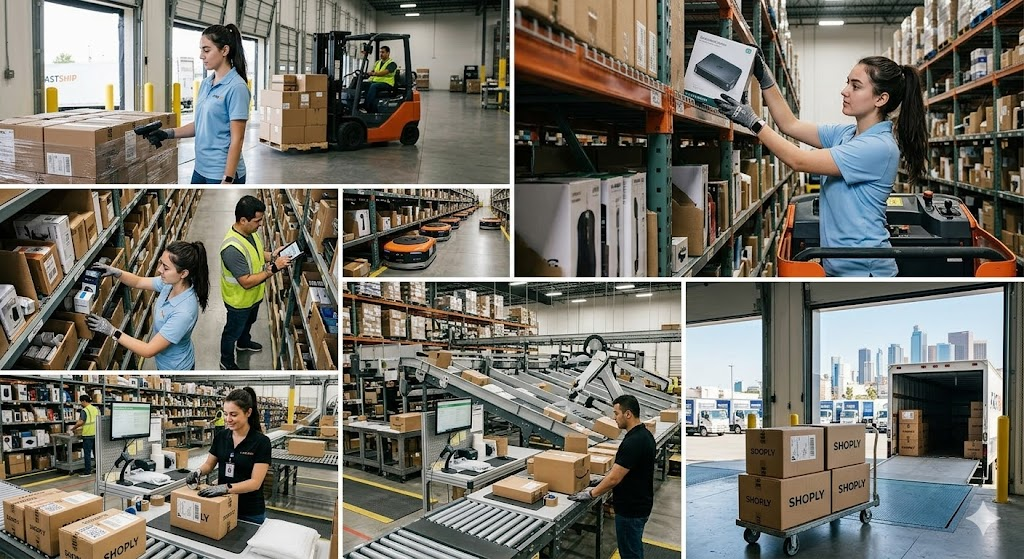
Logistics plays a very important role in the success of e-commerce businesses. After a customer places an order, the product must be packed, shipped, and delivered to the customer’s location.
Large e-commerce companies have developed strong logistics systems to ensure fast and reliable delivery. Many companies now provide same-day delivery or next-day delivery services.
For example, Amazon offers fast delivery services through its advanced logistics network.
Efficient logistics management includes:
- Warehousing
- Inventory management
- Packaging
- Shipping
- Order tracking
- Delivery management
These processes ensure that customers receive their products on time.
Customer Experience in E-Commerce
Customer experience is one of the most important factors that determine the success of an e-commerce business. A good customer experience encourages customers to return and purchase again.
Online stores focus on providing:
- Easy website navigation
- Fast loading speed
- Clear product descriptions
- High-quality images
- Secure payment options
- Quick customer support
Many companies also provide customer reviews and ratings to help buyers make informed decisions.
Positive customer experiences lead to:
- Customer loyalty
- Positive reviews
- Increased sales
- Brand reputation
Businesses that prioritize customer satisfaction are more likely to succeed in the competitive e-commerce market.
Role of Artificial Intelligence in E-Commerce
Artificial intelligence (AI) has become an important technology in modern e-commerce systems. AI helps businesses analyze customer behavior and improve shopping experiences.
Some applications of AI in e-commerce include:
Product Recommendations
AI systems analyze customer browsing and purchase history to recommend products that customers may like.
For example, when customers shop on Amazon, they often see suggestions such as “Customers who bought this item also bought…”.
Chatbots
Many e-commerce websites use chatbots to provide instant customer support. Chatbots can answer common questions, guide customers, and solve simple problems.
Inventory Management
AI helps businesses predict product demand and manage inventory efficiently.
Security in E-Commerce
Security is a major concern for both customers and businesses in online transactions. Customers share sensitive information such as credit card details and personal addresses while shopping online.
To protect this information, e-commerce websites use advanced security technologies such as:
- Secure Socket Layer (SSL) encryption
- Two-factor authentication
- Secure payment gateways
- Fraud detection systems
Payment platforms such as PayPal and Google Pay use secure systems to protect financial transactions.
Businesses must ensure that their websites are secure to build trust with customers.
Challenges in E-Commerce Business
Despite its many benefits, e-commerce businesses also face several challenges.
High Competition
The online marketplace is highly competitive. Many businesses sell similar products, which makes it difficult to stand out.
Customer Trust
Some customers hesitate to shop online because they worry about fraud or receiving low-quality products.
Logistics Issues
Shipping delays, damaged products, or lost packages can negatively affect customer satisfaction.
Technology Costs
Building and maintaining an e-commerce website requires investment in technology and infrastructure.
Businesses must overcome these challenges by providing quality products, reliable delivery, and excellent customer service.
E-Commerce Marketing Strategies
Marketing plays a crucial role in attracting customers to an online store.
Some effective e-commerce marketing strategies include:
Search Engine Optimization (SEO)
SEO helps websites rank higher on search engines like Google Search. Higher rankings bring more organic traffic to the website.
Social Media Marketing
Businesses promote products through social media platforms such as:
- YouTube
These platforms allow businesses to connect with millions of users.
Influencer Marketing
Influencers promote products to their followers, which increases brand awareness and sales.
Content Marketing
Businesses create blog posts, videos, and guides to educate customers and attract website visitors.
Importance of Product Reviews in E-Commerce
Product reviews are an important part of online shopping. Customers often read reviews before making a purchase decision.
Positive reviews increase trust and encourage new customers to buy products.
Online marketplaces such as Amazon allow customers to rate products and share their experiences.
Businesses should encourage customers to leave honest feedback.
E-Commerce in India
E-commerce in India has grown rapidly in recent years due to increasing internet usage and smartphone adoption.
Major e-commerce companies in India include:
- Flipkart
- Amazon
- Myntra
The Indian government has also promoted digital payments and online transactions, which has supported the growth of its
Digital payment apps such as PhonePe and Google Pay are widely used by Indian consumers.
The future of e-commerce in India is expected to grow even more as internet access expands in rural areas.
Future Trends
Several emerging technologies are shaping the future of e-commerce.
Augmented Reality (AR)
AR technology allows customers to visualize products before purchasing them. For example, customers can see how furniture will look in their homes.
Voice Commerce
Voice assistants such as Amazon Alexa allow users to shop using voice commands.
Personalized Shopping
Advanced data analysis helps businesses provide personalized recommendations and offers.
Faster Delivery
Companies are working on drone delivery and automated warehouses to improve delivery speed.
Conclusion
it has revolutionized the global business landscape by making buying and selling easier, faster, and more convenient. With the help of the internet and digital technologies, businesses can reach customers across the world.
Companies such as Amazon, Flipkart, and Alibaba Group have demonstrated how powerful e-commerce platforms can be in connecting buyers and sellers.
The continuous development of technologies such as artificial intelligence, mobile commerce, and digital payments will further strengthen the e-commerce industry.
For students, entrepreneurs, and business owners, understanding is essential in the modern digital economy. As the internet continues to grow, e-commerce will remain one of the most important drivers of global trade and economic development.
E-Commerce Website Design
A well-designed e-commerce website plays a crucial role in attracting customers and increasing sales. The design of an online store should be simple, attractive, and easy to navigate. Customers should be able to find products quickly and complete their purchases without confusion.
Some important elements of a good website include:
User-Friendly Interface
The website should have a clean layout so that customers can easily browse different categories and products.
Fast Loading Speed
If a website takes too long to load, visitors may leave before making a purchase. Fast-loading pages improve user experience and increase conversions.
Mobile-Friendly Design
Since many customers shop using smartphones, the website must be optimized for mobile devices.
Clear Product Categories
Products should be organized into clear categories such as electronics, clothing, home appliances, and accessories. This makes it easier for customers to find what they are looking for.
High-Quality Images
Customers cannot physically see or touch products online, so high-quality images help them understand the product better.
Many businesses create their online stores using platforms like Shopify or WooCommerce because these platforms offer easy website-building tools.
Inventory Management
Inventory management refers to the process of tracking and managing products that a business sells. In e-commerce, inventory management is very important because businesses must always know how many products are available in stock.
Good inventory management helps businesses:
- Avoid selling out-of-stock products
- Maintain the right amount of stock
- Reduce storage costs
- Improve order fulfillment
Large companies use advanced software systems to track inventory in real time. These systems automatically update stock levels whenever a product is sold.
Proper inventory management ensures smooth business operations and better customer satisfaction.
Order Management System
An order management system is used to track and manage customer orders from the moment a purchase is made until the product is delivered.
The order management process usually includes:
- Order placement
- Payment confirmation
- Order processing
- Packaging
- Shipping
- Delivery
Efficient order management systems help businesses deliver products quickly and accurately.
Many online marketplaces such as Amazon use automated systems to handle millions of orders every day.
Role of Customer Support
Customer support is a very important part of business. Customers may have questions about products, payments, shipping, or returns.
Providing quick and helpful support improves customer satisfaction and builds trust.
Common customer support methods include:
- Live chat support
- Email support
- Phone support
- AI chatbots
Some companies use automated chat systems to answer frequently asked questions instantly.
Good customer support can turn first-time buyers into loyal customers.
Return and Refund Policies
Return and refund policies are essential in it because customers cannot physically inspect products before purchasing them.
A clear return policy allows customers to return products if they are damaged, defective, or not as described.
Flexible return policies increase customer confidence and encourage online purchases.
For example, companies like Amazon offer easy return options for many products.
Businesses should clearly explain their return and refund policies on their websites.
Role of Data Analytics
Data analytics helps e-commerce businesses understand customer behavior and improve their marketing strategies.
By analyzing customer data, businesses can learn:
- Which products are most popular
- Which marketing campaigns are effective
- What customers are searching for
- How customers interact with the website
Data analytics tools help businesses make better decisions and improve sales performance.
Search engines like Google Analytics provide valuable insights into website traffic and customer behavior.
Cross-Border E-Commerce
Cross-border e-commerce refers to selling products to customers in other countries through online platforms.
This allows businesses to reach international markets without opening physical stores in different locations.
Benefits of cross-border include:
- Access to global customers
- Increased sales opportunities
- Brand expansion
However, businesses must also consider factors such as:
- International shipping costs
- Customs regulations
- Currency conversion
- Language differences
Large companies such as Alibaba Group connect businesses with customers from many countries around the world.
Sustainability
Sustainability has become an important issue in modern e-commerce. Businesses are now trying to reduce their environmental impact.
Some eco-friendly practices include:
- Using recyclable packaging
- Reducing plastic usage
- Optimizing delivery routes to reduce fuel consumption
- Offering digital receipts instead of printed ones
Customers are becoming more aware of environmental issues and prefer to support businesses that follow sustainable practices.
Many companies are investing in green logistics and environmentally friendly packaging solutions.
E-Commerce and Social Media Integration
Social media platforms have become powerful tools for promoting e-commerce businesses.
Companies often use platforms such as:
- YouTube
to showcase products and connect with customers.
Social media allows businesses to:
- Share product photos and videos
- Promote discounts and offers
- Engage with customers through comments and messages
- Build brand awareness
Some platforms even allow users to shop directly through social media posts.
Dropshipping
Dropshipping is a business model in which sellers do not keep products in stock. Instead, they purchase products from suppliers only after receiving customer orders.
The supplier then ships the product directly to the customer.
Benefits of dropshipping include:
- Low startup costs
- No need for inventory storage
- Reduced financial risk
However, sellers must carefully choose reliable suppliers to ensure product quality and timely delivery.
Many entrepreneurs start their online businesses using dropshipping.
Role of Customer Loyalty Programs
Customer loyalty programs help businesses retain existing customers and encourage repeat purchases.
Examples of loyalty programs include:
- Reward points for purchases
- Special discounts for loyal customers
- Exclusive offers and early access to sales
Loyalty programs create a strong relationship between businesses and customers.
Satisfied customers are more likely to recommend the brand to others.
Impact on Traditional Retail
it has significantly changed the traditional retail industry. Many physical stores have had to adapt to the growing popularity of online shopping.
Some traditional retailers now use omnichannel strategies, which combine online and offline shopping experiences.
For example:
- Customers can order products online and pick them up in stores.
- Retail stores use websites and mobile apps to reach more customers.
By combining physical stores with online platforms, businesses can offer better services to customers.
Skills Needed
People working in the e-commerce industry need a variety of skills.
Some important skills include:
- Digital marketing
- Search engine optimization (SEO)
- Data analysis
- Website management
- Customer service
- Content creation
Students studying business, marketing, or computer applications can build successful careers in this field.
Final Thoughts
it has transformed the way businesses operate and how customers purchase products. It has made shopping faster, easier, and more convenient for people around the world.
With the growth of the internet, smartphones, and digital payment systems, it will continue to expand in the future.
Companies such as Amazon, Flipkart, and Alibaba Group have demonstrated the immense potential of online commerce.
As technology continues to evolve, new innovations such as artificial intelligence, augmented reality, and voice shopping will further improve the online shopping experience.
For entrepreneurs, students, and businesses, understanding is essential in today’s digital world. The future of commerce will increasingly depend on digital platforms, and businesses that adapt to these changes will be more successful in the global marketplace.