
Flower Nursery Business From Home: A Complete Step-by-Step Guide
The flower nursery business from home is becoming one of the most popular small business ideas for people who love plants and want to earn income without heavy investment. With increasing interest in gardening, landscaping, and eco-friendly lifestyles, the demand for flowering plants has grown rapidly. Starting a flower nursery at home allows you to turn your passion for flowers into a profitable business while working in a peaceful and natural environment.
This article explains everything you need to know about starting, managing, and growing a flower nursery business from home, even if you are a beginner.
What Is a Flower Nursery Business From Home?
A flower nursery business involves growing, maintaining, and selling flowering plants, saplings, seeds, and sometimes gardening materials. Unlike selling cut flowers only, a nursery focuses on selling live plants that customers can grow in their homes, gardens, offices, or farms.
Market Demand for Flower Nursery Business From Home
The market demand for flowering plants has increased significantly in recent years. Urban homes now prefer greenery and colorful plants for balconies and terraces. Offices, hotels, and resorts regularly buy flowering plants for decoration. Event planners and wedding decorators also require large quantities of flowers and plants.
Online plant sales have further boosted the market. Many customers now prefer buying plants directly from local nurseries instead of large stores because local plants are healthier and better adapted to the climate. This creates a strong opportunity for home-based nursery owners.
Why Start a Flower Nursery Business From Home?
Starting a flower nursery from home has many advantages compared to other businesses.
First, it requires low initial investment, especially when compared to shops or factories. Second, you do not need to pay rent, which reduces monthly expenses. Third, the business is flexible, allowing you to work at your own pace. Fourth, it is an eco-friendly and sustainable business, which is highly valued today.
Additionally, flowers are always in demand for:
- Religious ceremonies
- Weddings and events
- Home decoration
- Landscaping
- Gifting purposes
Because of this constant demand, the flower nursery business has strong long-term potential.
Space Requirement for a Flower Nursery Business From Home
One of the biggest benefits of this business is that it can be started in a small space. You can begin with as little as 300 to 500 square feet and expand later.
Suitable spaces include:
- Backyard garden
- Terrace or rooftop
- Balcony with vertical racks
- Open area beside the house
As the business grows, you can add shade nets, racks, or even a small polyhouse to increase production.
Types of Flowers Suitable for Home Nursery
Choosing the right type of flowers is very important for success. Beginners should start with flowers that are easy to grow and have high market demand.
Seasonal Flowers
Seasonal flowers grow quickly and sell fast.
Examples include marigold, petunia, zinnia, phlox, and cosmos.
Perennial Flowers
These flowers live for many years and provide long-term income.
Examples include rose, hibiscus, jasmine, chrysanthemum, and bougainvillea.
Indoor Flowering Plants
Indoor plants are highly popular in urban areas.
Examples include orchids, anthurium, peace lily, and begonia.
Flowering Shrubs
These plants are often used in landscaping.
Examples include ixora, gardenia, oleander, and adenium.
Start with a limited number of varieties and expand based on customer demand.
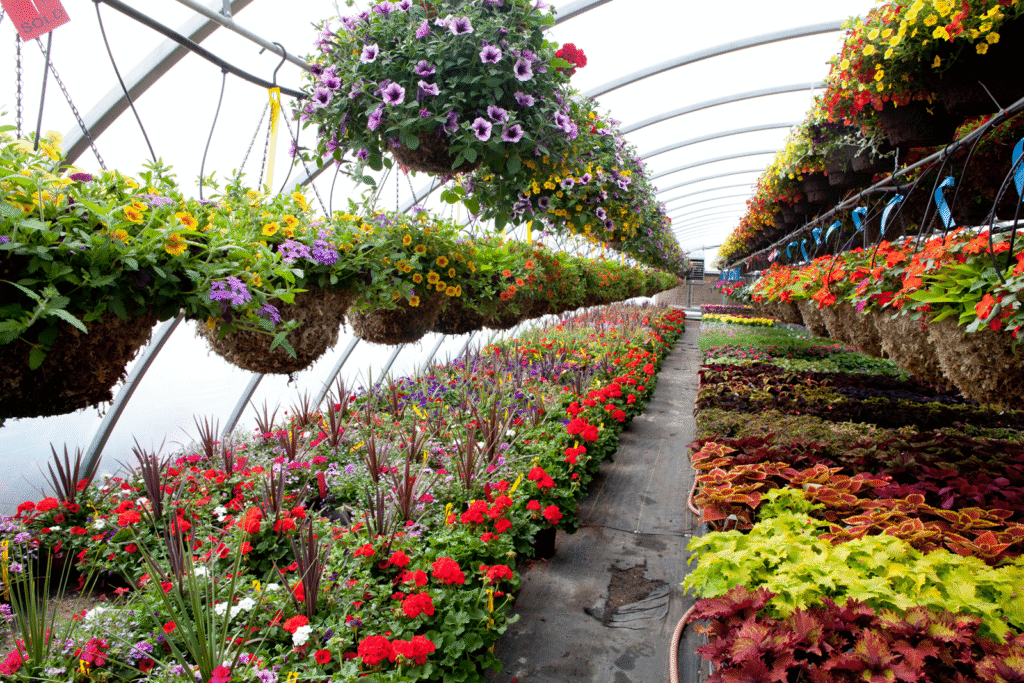
Basic Materials and Tools Required
To start a flower nursery business from home, you will need some basic materials:
- Flower pots and grow bags
- Good quality garden soil
- Cocopeat and sand
- Organic compost or vermicompost
- Seeds and saplings
- Watering cans or drip irrigation system
- Shade net
- Natural pest control solutions
These materials are easily available and affordable.
Investment Required to Start the Flower Nursery Buiness From Home
The investment depends on the scale of your nursery.
- Small scale: ₹20,000 – ₹40,000
- Medium scale: ₹50,000 – ₹1,00,000
If you already have space and basic tools, the cost can be even lower. The business can be expanded gradually using profits.
Step-by-Step Process to Start Flower Nursery Business From Home
Step 1: Planning and Research
Before starting, research the local market. Find out which flowers sell more, what prices are common, and who your competitors are. Planning helps reduce risk and increases profit.
Step 2: Selecting the Right Location
Choose a place that receives enough sunlight, has good airflow, and allows easy watering. Most flowering plants need at least 4 to 6 hours of sunlight daily.
Step 3: Soil Preparation
Healthy plants depend on healthy soil. A good soil mix includes garden soil, cocopeat, and organic compost. Proper drainage is very important to prevent root damage.
Step 4: Planting and Propagation
Flowers can be grown using seeds, cuttings, or saplings. Learning basic propagation techniques helps reduce costs and increase plant quantity.
Step 5: Daily Care and Maintenance
Regular watering, pruning, fertilizing, and pest control are necessary. Plants should be checked daily to maintain quality and health.
Watering and Fertilization Management
Watering should be done carefully. Overwatering can damage roots, while underwatering can weaken plants. Organic fertilizers such as compost tea, vermicompost, and cow dung manure are ideal for flowering plants.
Proper nutrition improves flower quality, color, and plant strength.
Pest and Disease Control, Flower Nursery Business From Home
Pests and diseases are common challenges in nurseries. Using chemical pesticides should be avoided, especially in home nurseries.
Natural solutions include:
- Neem oil spray
- Garlic and chili spray
- Maintaining cleanliness
- Removing infected plants quickly
Healthy plants are less likely to be affected by diseases.
Legal Requirements and Registration
For small home-based nurseries, legal requirements are minimal. However, if you plan to sell on a large scale or online, you may need:
- Local trade license
- Nursery registration (if required by state)
- GST registration (optional for small businesses)
Always check local rules before expanding Flower Nursery Business From Home .
Pricing Strategy for Flower Nursery Products
Pricing should be based on plant size, variety, and market demand.
Average price examples:
- Seasonal plants: ₹30 – ₹80
- Rose and shrubs: ₹150 – ₹500
- Indoor flowering plants: ₹300 – ₹2000
Offering discounts for bulk buyers increases sales.
Marketing Strategies for Flower Nursery Business From Home
Offline Marketing
Selling directly from home, participating in local plant exhibitions, and word-of-mouth promotion work very well.
Online Marketing
Using WhatsApp Business, Instagram, Facebook, and Google Business Profile helps reach more customers. Posting plant care tips and photos builds trust and attracts buyers.
Selling Channels for Flower Nursery Business From Home
You can sell your plants through:
- Direct home sales
- Weekly markets
- Online orders
- Landscaping companies
- Event planners
- Schools and offices
Multiple selling channels increase income stability.
Profit Margin in Flower Nursery Business From Home
Profit margins in this business are attractive.
- Seasonal flowers: 30%–50%
- Perennial plants: 50%–70%
- Rare flowering plants: up to 100%
A small nursery can earn ₹10,000–₹25,000 per month, while a medium setup can earn ₹50,000 or more.
Challenges in Flower Nursery Business From Home
Common challenges include weather changes, pest attacks, and initial low sales. These problems can be managed with proper planning, shade nets, organic care, and consistent marketing.
Tips for Success in Flower Nursery Business From Home
- Start small and grow slowly
- Focus on plant quality
- Learn continuously about gardening
- Understand customer preferences
- Keep records of expenses and sales
Patience and consistency are the keys to success.
Future Growth Opportunities Flower Nuesery Business From Home
Once established, you can expand into:
- Landscaping services
- Online plant store
- Flower decoration business
- Gardening training classes
- Organic fertilizer production
These options increase income and brand value.
Conclusion
The flower nursery business from home is a profitable, low-risk, and environmentally friendly business idea. With proper planning, basic gardening knowledge, and smart marketing, anyone can start this business and achieve long-term success. It not only provides income but also offers peace, satisfaction, and a close connection with nature.
Role of Technology in Flower Nursery Business From Home
Technology plays an important role in modern Flower Nursery Businesses From Home, even when operated from home. Simple tools like mobile apps for weather updates help nursery owners plan watering and plant care efficiently. Online tutorials, gardening blogs, and YouTube channels provide continuous learning opportunities about new plant varieties, pest control methods, and advanced propagation techniques.
Digital record-keeping using mobile apps or spreadsheets helps track expenses, sales, and profits accurately. This makes financial planning easier and supports business growth. Social media platforms also act as free marketing tools, allowing nursery owners to showcase new plants, flowering stages, and customer reviews, which increases credibility and reach.
Importance of Customer Trust and Plant Quality
Customer trust is one of the most valuable assets in a flower nursery business. Customers prefer buying plants from nurseries that offer healthy, well-grown, and disease-free plants. Providing proper guidance on plant care, sunlight requirements, watering schedules, and fertilizer use builds long-term relationships with customers.
Replacing damaged plants or offering basic after-sales support creates goodwill and repeat customers. When customers are satisfied, they recommend the nursery to friends and family, which increases sales through word-of-mouth marketing. Maintaining consistent quality is more important than selling a large quantity of plants.
Seasonal Planning for Better Profits
Seasonal planning helps maximize profits in the Flower Nursery Business From Home. Different flowers grow and sell better in different seasons. For example, marigolds and petunias sell more during festivals and wedding seasons, while indoor flowering plants sell throughout the year.
By planning plant production according to seasonal demand, nursery owners can avoid losses caused by unsold plants. Growing seedlings in advance ensures that plants are ready for sale at the right time. Seasonal planning also helps in managing resources like water, fertilizers, and space more efficiently Flower Nursery Business From Home.
Sustainable and Eco-Friendly Practices
Adopting sustainable practices not only reduces costs but also attracts environmentally conscious customers. Using organic compost, rainwater harvesting, biodegradable pots, and natural pest control methods improves the nursery’s eco-friendly image.
Many customers now prefer buying plants grown without chemical fertilizers and pesticides. Promoting your nursery as an organic or eco-friendly nursery can give you a competitive advantage in the market. Sustainability also improves soil health and plant life in the long run.
Training and Skill Development
Although formal education is not required, learning basic horticulture skills greatly improves success. Attending local gardening workshops, nursery training programs, or online certification courses helps gain practical knowledge. Skills such as pruning, grafting, potting, and disease identification increase plant quality and reduce losses Flower Nursery Business From Home.
Continuous learning keeps nursery owners updated with new trends like exotic flowering plants, bonsai, and ornamental gardening, which can be added to the business for higher profits.
Long-Term Vision and Business Expansion
Having a long-term vision is essential for turning a home-based flower nursery into a successful enterprise. Initially, the focus should be on stability and consistent income. As experience and customer base grow, expansion opportunities such as supplying plants to builders, hotels, and government projects can be explored Flower Nursery Business From Home.
Gradual expansion ensures financial safety and reduces risk. With dedication, planning, and passion, a small Flower Nursery Business From Home nursery can transform into a well-known brand in the local plant market.
Importance of Climate and Regional Planning
Climate plays a major role in the success of a Flower Nursery Business From Home. Each region has its own temperature range, rainfall pattern, and humidity level, which directly affect plant growth. Understanding local climate conditions helps in selecting flower varieties that grow naturally and require less maintenance.
For example, tropical regions are suitable for hibiscus, jasmine, and bougainvillea, while cooler regions support roses, petunias, and pansies. Growing climate-appropriate plants reduces plant loss and improves flowering quality. Using shade nets, mulching, and proper ventilation helps control extreme temperatures and protects plants from climate stress.
Water Management and Irrigation Techniques
Efficient water management is essential in a home-based flower nursery. Water is a valuable resource, and improper use can lead to root diseases, fungal infections, and nutrient loss. Installing a simple drip irrigation system helps provide consistent moisture without water wastage.
Rainwater harvesting is another effective solution, especially in areas with seasonal rainfall. Collected rainwater can be stored and used for watering plants, reducing dependency on external water sources. Mulching the soil surface also helps retain moisture and maintain soil temperature.

Packaging and Presentation of Plants
The way plants are presented greatly influences customer buying decisions. Clean pots, attractive grow bags, and properly labeled plants create a professional impression. Labels should include plant name, sunlight requirement, and watering instructions.
Using eco-friendly packaging materials such as biodegradable pots and paper wraps enhances the brand image and attracts environmentally conscious buyers. Attractive presentation increases perceived value and allows nursery owners to charge better prices.
Customer Education and Value Addition
Educating customers adds value to the Flower Nursery Business From Home. Many buyers are beginners and need guidance on plant care. Providing simple care leaflets, QR codes linking to care videos, or short WhatsApp messages builds customer confidence.
Hosting small gardening workshops or live demonstrations at home nursery locations increases customer engagement. Educated customers are more likely to succeed in growing plants, which results in repeat purchases and long-term loyalty.
Managing Inventory and Reducing Waste
Inventory management is crucial to prevent losses. Overproduction can lead to unsold plants, while underproduction can result in missed sales opportunities. Keeping records of plant growth cycles, sales patterns, and seasonal demand helps balance inventory Flower Nursery Business From Home.
Plants that are not sold in time can be reused for propagation, donated, or offered at discounted prices. Proper planning ensures minimal waste and maximum utilization of resources.
Financial Planning and Cost Control
Tracking expenses and income is important for business sustainability. Costs include soil, pots, seeds, fertilizers, water, and labor. Maintaining a simple profit and loss record helps identify areas where expenses can be reduced.
Bulk purchasing of materials lowers costs. Reusing pots, composting plant waste, and producing your own manure also help control expenses. Financial discipline ensures consistent profit even during slow sales periods.
Building a Brand Identity for Your Nursery
Branding helps your nursery stand out in a competitive market. A unique nursery name, simple logo, and consistent color theme create recognition. Displaying your nursery name on pots, packaging, and social media profiles builds trust.
Customer testimonials, before-and-after plant photos, and success stories shared online strengthen brand credibility. Over time, your nursery can become a trusted local brand.
Networking and Business Partnerships
Building relationships with landscapers, garden designers, event planners, and flower decorators opens new sales channels. Supplying plants in bulk to these professionals provides steady income and large orders.
Participating in plant exhibitions, garden shows, and local fairs increases visibility and networking opportunities. Partnerships help expand the business beyond individual customers.
Risk Management and Backup Planning
Like any business, a flower nursery faces risks such as extreme weather, pest outbreaks, or sudden market changes. Preparing backup plans such as insurance, shade structures, and diversified plant varieties reduces risk.
Growing a mix of fast-selling and long-term plants balances income and protects against seasonal losses. Risk management ensures business stability.
Work-Life Balance in Home-Based Nursery Business
One of the biggest advantages of running a Flower NurseryBusiness From Home is work-life balance. However, proper scheduling is necessary to avoid burnout. Creating a daily routine for watering, maintenance, and customer interaction improves productivity.
Taking breaks and involving family members creates a supportive working environment. Enjoying the process keeps motivation high and improves business success.
Risk Management and Backup Planning
Like any business, a flower nursery faces risks such as extreme weather, pest outbreaks, or sudden market changes. Preparing backup plans such as insurance, shade structures, and diversified plant varieties reduces risk.
Growing a mix of fast-selling and long-term plants balances income and protects against seasonal losses. Risk management ensures business stability.
Work-Life Balance in Home-Based Nursery Business
One of the biggest advantages of running a Flower Nursery Business From Home is work-life balance. However, proper scheduling is necessary to avoid burnout. Creating a daily routine for watering, maintenance, and customer interaction improves productivity.
Taking breaks and involving family members creates a supportive working environment. Enjoying the process keeps motivation high and improves business success.
Final Thoughts on Long-Term Success
The flower nursery business from home is not just about selling plants; it is about building relationships, maintaining quality, and growing with experience. Success comes with patience, dedication, and continuous learning.
With the right mindset and planning, a small home nursery can evolve into a profitable and respected business that provides financial stability and personal satisfaction for many years.