
Stories That Redefined Success in India
India is a land of dreams, struggles, and unstoppable ambition. From small towns to global boardrooms, Indian entrepreneurs have rewritten the rules of success with courage, innovation, and persistence. These legendary Indian entrepreneurs did not inherit empires; they built them brick by brick, often against overwhelming odds.
The story of Indian entrepreneurship is not merely a chronicle of profit and loss; it is the saga of a nation’s soul seeking expression through industry. For centuries, India was the world’s economic powerhouse, a hub of trade and craftsmanship that drew explorers from across the globe. However, following a long period of colonial stagnation, the 20th century required a new kind of hero—one who could wield a balance sheet as a tool for nation-building.
The legends featured in this blog are the architects of that transformation. They operated in an era where “startup” wasn’t a buzzword, venture capital was non-existent, and the “License Raj” created a labyrinth of bureaucratic hurdles that would stifle the faint-hearted. To be an entrepreneur in India during the mid-to-late 20th century was an act of rebellion. It required a unique blend of Gandhian frugality, Victorian work ethic, and an indomitable Indian spirit known as jugaad—the ability to find innovative solutions within extreme constraints.
The Evolution of the Indian Dream
To understand these journeys, we must look at the three distinct waves they represent:
- The Pioneers (Pre-1947 to 1960s): Figures like G.D. Birla and J.R.D. Tata who laid the industrial floorboards. They proved that Indians could manufacture steel, fly planes, and weave textiles just as well as, if not better than, their colonial counterparts.
- The Disruptors (1970s to 1980s): The era of Dhirubhai Ambani and Kiran Mazumdar-Shaw. These leaders challenged the status quo, breaking into protected sectors and proving that scale and scientific innovation were possible even in a closed economy.
- The Globalists (1990s to 2000s): Following the 1991 liberalization, leaders like Narayana Murthy and Azim Premji turned India’s gaze outward. They didn’t just compete in India; they made “Made in India” a global benchmark for excellence in technology and services.
Why Their Stories Matter Now
In today’s world of “blitzscaling” and “burn rates,” these legendary journeys offer a grounding perspective. They remind us that the most enduring companies are built on values, not just valuations. They show us that a business’s success is inextricably linked to the prosperity of the community it serves. Whether it was Verghese Kurien empowering millions of dairy farmers or Ratan Tata acquiring global icons to boost national pride, their primary “product” was always hope.
As we delve into these ten remarkable lives, we see a common thread: they didn’t wait for the perfect conditions to start. They started where they were, used what they had, and did what they could. This is the essence of the Indian entrepreneurial spirit—a spirit that continues to inspire a new generation of founders today.
1. J.R.D. Tata: The Ethical Architect of Modern India
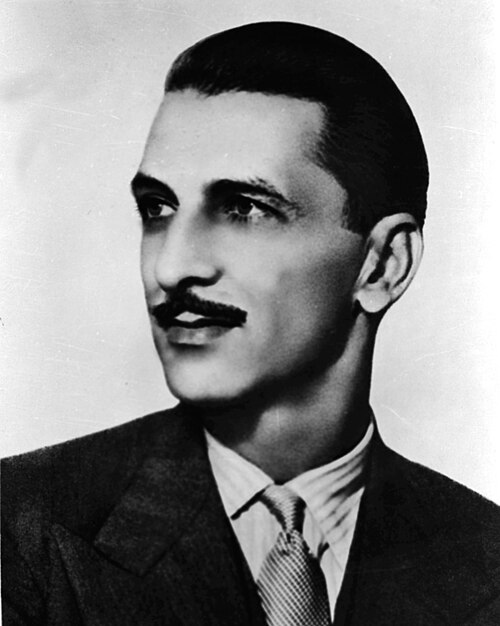
Company: Tata Group
Key Contribution: Pioneering Indian aviation and institutionalizing corporate social responsibility.
Jehangir Ratanji Dadabhoy (J.R.D.) Tata was more than an industrialist; he was a Renaissance man. Taking the helm of the Tata Group in 1938 at the young age of 34, he expanded an empire that already included steel and hotels into chemicals, tea, and technology.
The Flight of Ambition
J.R.D.’s most personal passion was aviation. In 1932, he piloted the first solo flight from Karachi to Bombay, laying the groundwork for Tata Airlines, which would later become Air India. When the government nationalized the airline in 1953, J.R.D. was heartbroken but remained its chairman for 25 years, ensuring it maintained world-class standards.
Leadership Style
Under his 50-year leadership, the Tata Group grew from 14 enterprises to a conglomerate of 95. However, his true legacy lies in Trusteeship. He believed that the wealth generated by industry should go back to the people. He pioneered the 8-hour workday, free medical aid, and provident funds long before they were mandated by law.
“No success or achievement in material terms is worthwhile unless it serves the needs or interests of the country and its people.” — J.R.D. Tata
2. Dhirubhai Ambani: The Master of Scale
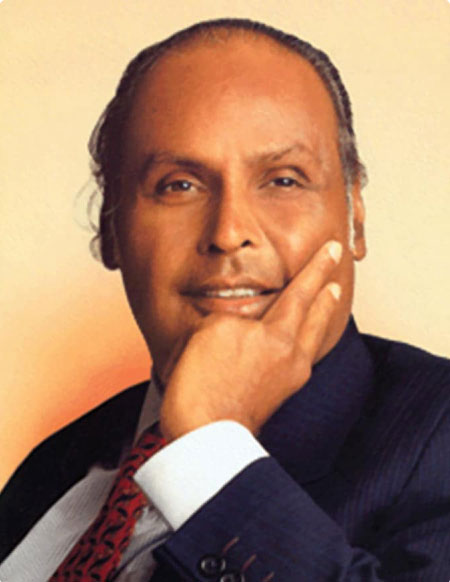
Company: Reliance Industries
Key Contribution: Democratizing the Indian stock market and building world-class infrastructure.
If J.R.D. Tata represented the “old guard” of ethics and tradition, Dhirubhai Ambani represented the “new India”—unapologetic, ambitious, and extraordinarily fast. Born to a humble schoolteacher in Gujarat, Dhirubhai worked as a gas station attendant in Aden, Yemen, before returning to India with just ₹15,000.
From Textiles to Petrochemicals
He started with a small spice trading business, but his real breakthrough came with Vimal, a textile brand that became a household name. Dhirubhai’s genius wasn’t just in manufacturing; it was in Backward Integration. He didn’t want to just make fabric; he wanted to make the yarn, the chemicals, and eventually refine the oil that produced them. This led to the creation of the Jamnagar Refinery, the largest in the world.
The Equity Cult
Dhirubhai is credited with bringing the “equity cult” to India. At a time when banks were hesitant to fund private businesses, he turned to the common man. Reliance’s IPOs were legendary, turning thousands of middle-class Indians into millionaires and creating a loyal shareholder base that exists to this day.
3. Ratan Tata: The Global Visionary
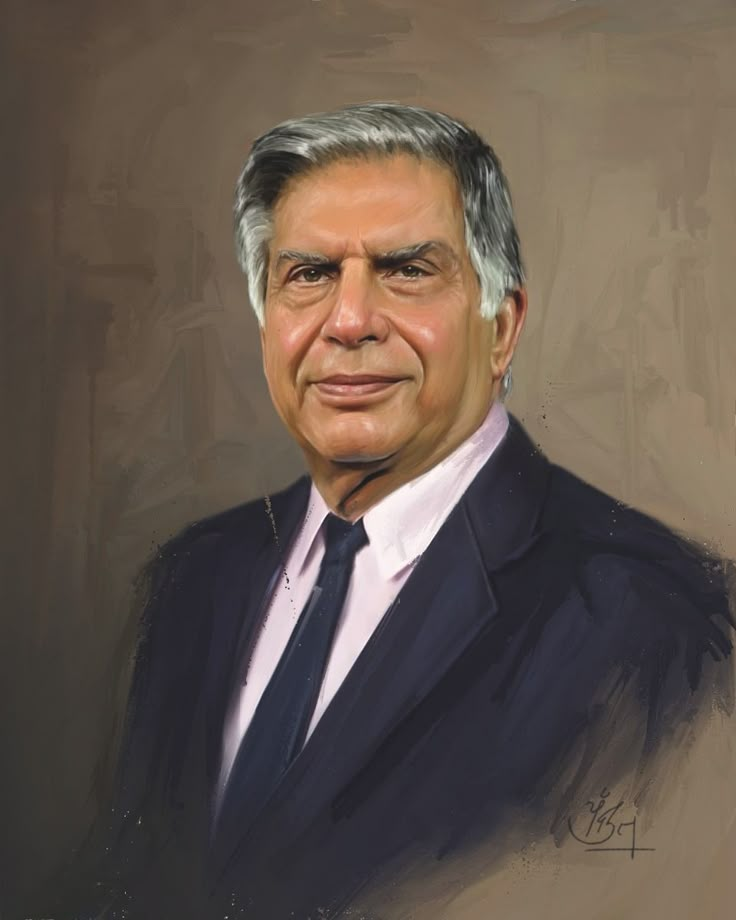
Company: Tata Group
Key Contribution: Transforming a domestic conglomerate into a global powerhouse.
Taking over from J.R.D. Tata in 1991, Ratan Tata faced a daunting task: modernizing a fragmented group of companies. He did so with a “quiet aggression” that stunned the global business community.
Iconic Acquisitions
Under Ratan Tata, the Group made historic acquisitions:
- Tetley Tea (2000)
- Corus Steel (2007)
- Jaguar Land Rover (2008)
When Tata Motors bought Jaguar Land Rover from Ford, it was seen as a poetic reversal of colonial history—an Indian company rescuing an iconic British brand.
The People’s Car
Ratan Tata’s commitment to social impact was best seen in the Tata Nano. Although it faced commercial hurdles, the project was born from a genuine desire to provide a safe, affordable car for families who typically traveled on two-wheelers in the rain.
4. Narayana Murthy: The Compassionate Capitalist
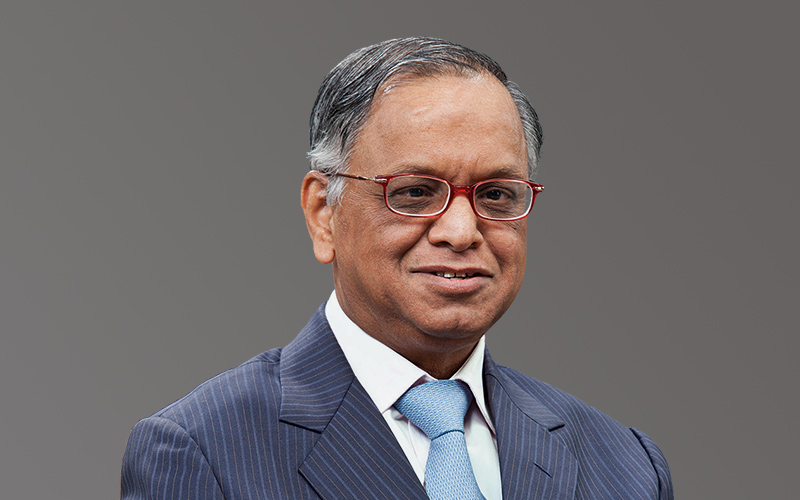
Company: Infosys
Key Contribution: Putting India on the global IT map through the Global Delivery Model.
Narayana Murthy started Infosys in 1981 with six friends and ₹10,000 borrowed from his wife, Sudha Murthy. He didn’t just build a software company; he built a culture of Corporate Governance.
The Global Delivery Model
Murthy pioneered the Global Delivery Model (GDM). This allowed Infosys to distribute work across different time zones, ensuring that while the US slept, India worked. This increased efficiency and lowered costs, making Indian IT services the backbone of the Fortune 500.
Ethics First
Murthy’s mantra was “Powered by intellect, driven by values.” Infosys was the first Indian company to be listed on the NASDAQ (1999). He famously lived a simple life, traveling in economy class and emphasizing that the “real power of a leader is the power to empower others.”
5. Azim Premji: The Tsar of the Indian IT Industry
Company: Wipro
Key Contribution: Transforming a vegetable oil company into a tech giant and setting a benchmark for philanthropy.
At age 21, Azim Premji had to drop out of Stanford to take over the family business, Western India Vegetable Products Ltd, after his father’s sudden death. He spent the next few decades diversifying into soaps, hydraulic cylinders, and eventually, information technology.
The Wipro Turnaround
When IBM was asked to leave India in the late 1970s, Premji saw a vacuum in the hardware and software market. He pivoted Wipro toward IT, focusing on high-quality standards (Wipro was one of the first to adopt Six Sigma).
The Great Giver
Premji is arguably India’s most generous philanthropist. He was the first Indian to sign The Giving Pledge. To date, he has earmarked more than $20 billion of his wealth for the Azim Premji Foundation, focusing on improving the quality of primary education in rural India.
6. Shiv Nadar: The “Magus” of Technology

Company: HCL (Hindustan Computers Limited)
Key Contribution: Creating the first Indian 8-bit microprocessor and fostering a hardware ecosystem.
While many associate Indian tech with services, Shiv Nadar started with hardware. In 1976, in a small “barsati” (rooftop room) in Delhi, Nadar and five colleagues founded HCL.
Innovation at the Core
HCL was a pioneer in the computing world, launching an 8-bit microprocessor in 1978, the same year as Apple and well before IBM. Nadar’s ability to pivot HCL from hardware to software services and eventually to R&D and engineering services (HCLTech) ensured the company remained relevant through every technological shift.
Education for All
Through the Shiv Nadar Foundation, he has invested heavily in creating “islands of excellence” like the SSN College of Engineering and Shiv Nadar University, believing that education is the most powerful tool for social transformation.
7. Kiran Mazumdar-Shaw: The Biotech Queen
Company: Biocon
Key Contribution: Breaking the glass ceiling in a male-dominated industry and making life-saving drugs affordable.
Kiran Mazumdar-Shaw’s journey is a story of “accidental entrepreneurship.” Trained as a master brewer in Australia, she found that no one in India would hire a woman as a brewmaster. Undeterred, she started Biocon in 1978 in her garage with a seed capital of ₹10,000.
From Enzymes to Insulin
Biocon began as an enzyme manufacturing company but transitioned into a biopharmaceutical giant. Kiran’s vision was clear: Affordable Innovation. She focused on developing “biosimilars”—complex biological drugs used for treating cancer and diabetes—at a fraction of the cost of Western alternatives.
Overcoming Bias
Early in her career, she faced immense skepticism. Banks wouldn’t lend to her, and vendors wouldn’t sell to her because she was a woman in a “risky” field. Today, she is one of the world’s most influential figures in science and business.
8. Lakshmi Mittal: The King of Steel
Company: ArcelorMittal
Key Contribution: Consolidating the global steel industry.
While many entrepreneurs on this list built empires within India, Lakshmi Mittal built a global empire from the outside in. Born in Rajasthan, he realized early on that the future of his family’s steel business lay in international expansion.
The Turnaround Artist
Mittal’s strategy was unique: he bought struggling, state-owned steel plants in countries like Indonesia, Kazakhstan, and Trinidad, and turned them around using superior management and technology.
The Arcelor Merger
His crowning achievement came in 2006 when his company, Mittal Steel, launched a hostile takeover of Arcelor, a European steel giant. The resulting entity, ArcelorMittal, became the largest steelmaker in the world, producing roughly 10% of the world’s total steel at its peak.
9. Verghese Kurien: The Milkman of India
Company: Amul (GCMMF)
Key Contribution: Transforming India from a milk-deficient nation to the world’s largest producer.
Though technically a professional manager/social entrepreneur, Dr. Verghese Kurien’s entrepreneurial spirit birthed the Amul brand. In 1949, he arrived in Anand, Gujarat, intending to serve his government bond and leave. Instead, he stayed to help a group of farmers fight a private milk monopoly.
Operation Flood
Kurien launched Operation Flood, the world’s largest dairy development program. He created a three-tier cooperative model:
- Village Societies (Collection)
- District Unions (Processing)
- State Federation (Marketing)
This model ensured that the profit stayed with the farmers, not middlemen. Today, Amul is a multi-billion dollar brand owned by millions of farmers.
10. Ghanshyam Das Birla: The Nationalist Industrialist
Company: Aditya Birla Group (Foundations)
Key Contribution: Building a self-reliant Indian industry during the British Raj.
G.D. Birla was a close associate of Mahatma Gandhi and a firm believer in “Swadeshi” (self-reliance). During the early 20th century, he challenged British monopolies in jute and textiles.
Building an Empire
He founded Hindustan Motors (makers of the iconic Ambassador car) and Grasim (textiles). His vision was to prove that Indian industry could compete with the best in the world. He also understood the importance of institutional building, founding the Birla Institute of Technology and Science (BITS), Pilani, which continues to produce India’s top engineering talent.
Lessons for Today’s Entrepreneurs
While the business landscape has shifted from the industrial age to the digital era, the DNA of a successful venture remains remarkably consistent. The 10 legends profiled above didn’t just leave behind massive conglomerates; they left a blueprint for every modern entrepreneurs seeking to build something that lasts.
By analyzing their collective history, we can distill critical insights for the next generation of entrepreneurs navigating today’s volatile market.
1. Resilience as the Core Entrepreneurial Asset
Every legendary entrepreneur on this list faced a moment that could have ended their journey. Kiran Mazumdar-Shaw was rejected by banks because she was a “high-risk” woman entrepreneurs in a new field. Dhirubhai Ambani started in a one-room chawl.
The lesson for the modern entrepreneurs is that failure isn’t the opposite of success; it’s a prerequisite. These entrepreneurs didn’t view setbacks as stop signs but as data points to pivot their strategy.
2. Solving Real-World Problems (The “Purpose” Pivot)
A common mistake for a first-time entrepreneurs is to fall in love with a product rather than a problem. However, these 10 entrepreneurs were obsessed with solving national-scale issues:
- Verghese Kurien solved the problem of middleman exploitation for farmers.
- Narayana Murthy solved the problem of global software delivery efficiency.
- Shiv Nadar solved the problem of indigenous hardware accessibility.
When entrepreneurs aligns their business goals with social needs, the venture gains a level of resilience that purely profit-driven startups lack.
3. The Power of “Backward Integration”
Dhirubhai Ambani was the ultimate entrepreneurs when it came to controlling the supply chain. He didn’t want to be at the mercy of suppliers. For a modern entrepreneurs, this translates to “owning the stack.” Whether it’s proprietary tech, a unique distribution channel, or raw material sourcing, the entrepreneurs who controls their inputs controls their destiny.
4. Building an “Equity Cult” and Trust
Perhaps the greatest lesson for the entrepreneurs is the importance of stakeholder trust. J.R.D. Tata and Ratan Tata proved that an entrepreneurs who treats employees and shareholders like family will have a loyal army standing by them during downturns.
- The Transparency Lesson: Narayana Murthy’s decision to list Infosys on the NASDAQ forced a level of transparency that was rare at the time, but it made him the most trusted entrepreneurs in the country.
5. Frugality vs. Scaling
Even as they became billionaires, these entrepreneurs maintained a culture of “frugal innovation.”
- Azim Premji famously monitored the number of toilet paper rolls used at Wipro offices.
- G.D. Birla lived by the philosophy of “Trusteeship.”
The modern entrepreneurs often focuses on “burn rates” and VC funding, but these legends show that a disciplined entrepreneurs focuses on unit economics and cash flow from day one.
6. Globalization is a Mindset
Lakshmi Mittal and Ratan Tata demonstrated that an Indian entrepreneurs should never be limited by geography. They saw the world as a single market. For today’s “born global” entrepreneurs, the takeaway is to build products that meet international standards (ISO, Six Sigma) right from the prototype stage
Summary Checklist for the Modern Entrepreneurs
| Attribute | Legendary Example | Takeaway for Today’s Entrepreneurs |
| Vision | J.R.D. Tata | Look 50 years ahead, not 5 months. |
| Grit | Kiran Mazumdar-Shaw | Don’t let bias or “No” stop your momentum. |
| Innovation | Shiv Nadar | Be the first to bring global tech to local markets. |
| Integrity | Narayana Murthy | Good governance is the best long-term strategy. |
| Scale | Dhirubhai Ambani | Think big, start small, and scale fast. |