
Introduction: Why Skills for Students Matter More Than Ever
In today’s fast-paced and competitive world, Skills for Students have become more important than academic degrees alone. The modern education system is no longer limited to textbooks and exams. Instead, it focuses on building real-world Skills for Students that help them succeed academically, professionally, and personally. Whether a student wants to excel in studies, secure a good job, or become an entrepreneur, strong Skills for Students play a crucial role.
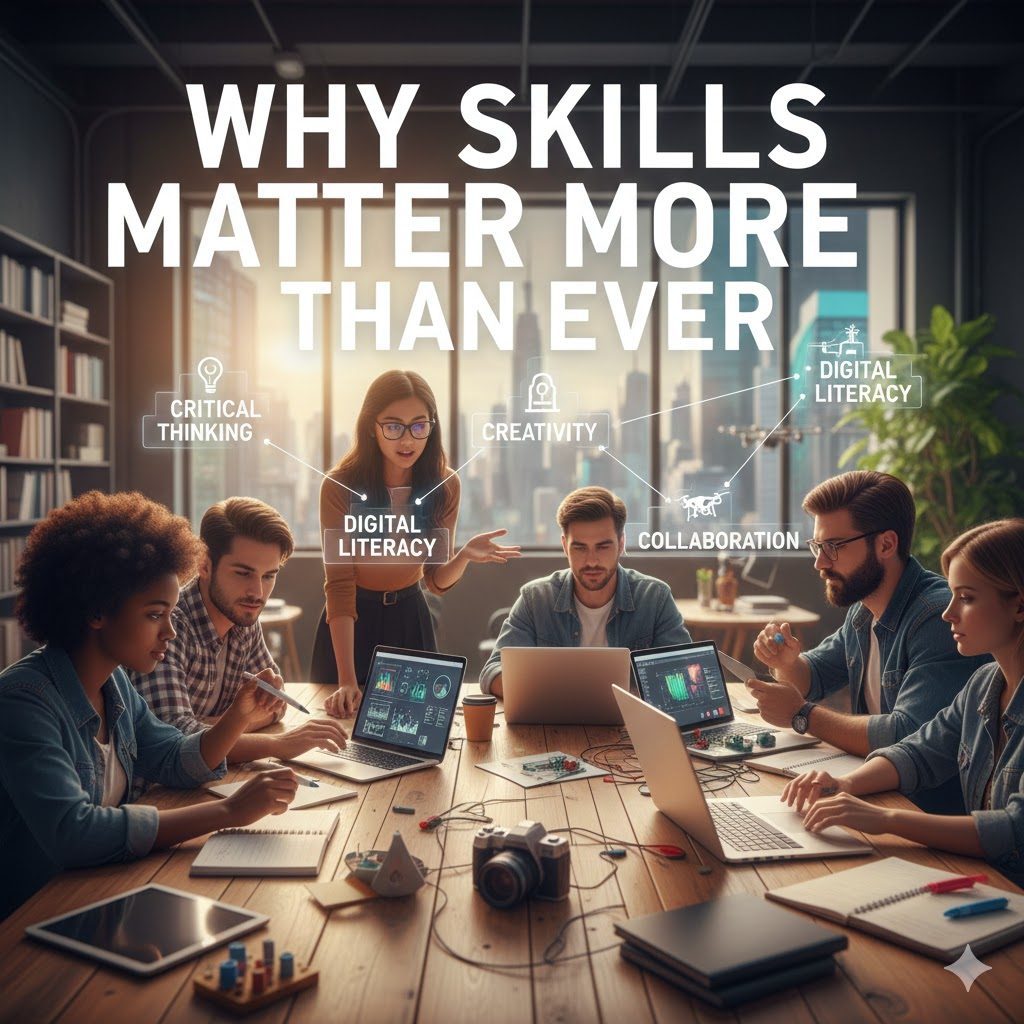
The rapid growth of technology, artificial intelligence, and global competition has changed how students learn and work. Employers today look for adaptable, confident, and skilled individuals rather than just high scorers. This is why developing essential Skills for Students such as communication, critical thinking, time management, digital literacy, emotional intelligence, leadership, and financial awareness is no longer optional—it is necessary.
Skills for Students help in building confidence, improving decision-making, managing stress, and solving real-life problems. They prepare students not only for exams but also for challenges beyond the classroom. From handling group projects to making career decisions, Skills for Students guide every step of a student’s journey.
This guide on the Top Skills for Students is designed to help learners understand what truly matters in 2026 and beyond. By focusing on these essential Skills for Students, learners can create a strong foundation for lifelong success, growth, and independence.
Skill 1: Effective Communication
What Is Effective Communication?
Communication is more than just talking or writing—it is about expressing your ideas clearly and understanding others effectively. Effective communication ensures your message is understood, builds strong relationships, and helps avoid misunderstandings. For students, communication is critical in almost every aspect of life: classroom discussions, group projects, presentations, interviews, and even online interactions.

There are three main types of communication every student should master:
- Verbal Communication – Speaking clearly, confidently, and persuasively. This includes participating in class, delivering presentations, or talking to peers and teachers.
- Non-verbal Communication – Using body language, facial expressions, gestures, and tone of voice to convey messages effectively. Often, how you say something is as important as what you say.
- Written Communication – Crafting emails, reports, essays, and messages in a concise and structured manner. This is crucial for academic success, internships, and future job opportunities.
Why Communication Skills Are Vital for Students
- Academic Excellence: Clear communication allows you to express ideas during discussions, debates, and presentations. This can significantly improve grades in group assignments or oral assessments.
- Career Readiness: Most employers value communication skills above technical knowledge. A student who can explain ideas clearly stands out in interviews and internships.
- Relationship Building: Good communication builds trust and rapport with peers, mentors, and teachers.
- Conflict Resolution: Many conflicts arise from misunderstandings. Effective communicators can resolve disagreements calmly and diplomatically.
Practical Ways to Improve Communication
- Join Public Speaking Clubs
Organizations like Toastmasters, debate clubs, and online speaking platforms help students overcome stage fear and develop clarity and confidence. - Practice Active Listening
Communication is a two-way street. Focus on understanding what others are saying instead of planning your response while they speak. - Read and Write Regularly
Reading expands vocabulary and comprehension skills, while writing daily—through journals, essays, or blogs—enhances your ability to organize and express thoughts. - Seek Feedback
After presentations or group discussions, ask peers or teachers for constructive feedback. This helps identify strengths and areas for improvement. - Record and Review Your Speaking
Use your phone to record presentations or practice speeches. Listening to yourself helps refine tone, clarity, and pacing.
Tools and Apps for Effective Communication
- Grammarly & Hemingway – Improve writing clarity, grammar, and readability.
- Canva & PowerPoint – Create visually appealing presentations that support your verbal message.
- TED Talks & YouTube Learning – Observe expert speakers and mimic techniques to enhance your style.
- AI Chatbots (like ChatGPT) – Practice conversation, writing, and debate skills interactively.
Real-Life Example
Consider a student named Aisha, who struggled with class presentations. She joined a public speaking club, practiced every week, and used feedback to improve. Over six months, Aisha not only gained confidence in speaking but also excelled in group projects, impressing teachers and peers alike. This simple yet consistent effort in communication transformed her academic and social life.
Tips for Daily Practice
- Speak clearly and slowly when explaining ideas.
- Use storytelling techniques to make presentations engaging.
- Maintain eye contact to connect with your audience.
- Participate actively in class discussions, even if it’s just asking one question.
- Write one paragraph daily summarizing a topic you learned—this strengthens clarity in writing.
Key Takeaway
Effective communication is not just about talking well—it is about making your ideas heard and understood, connecting with others, and building relationships. Students who invest in this skill early find that it enhances every other aspect of life, from academics to future careers.
Skill 2: Critical Thinking and Problem-Solving
What Is Critical Thinking?
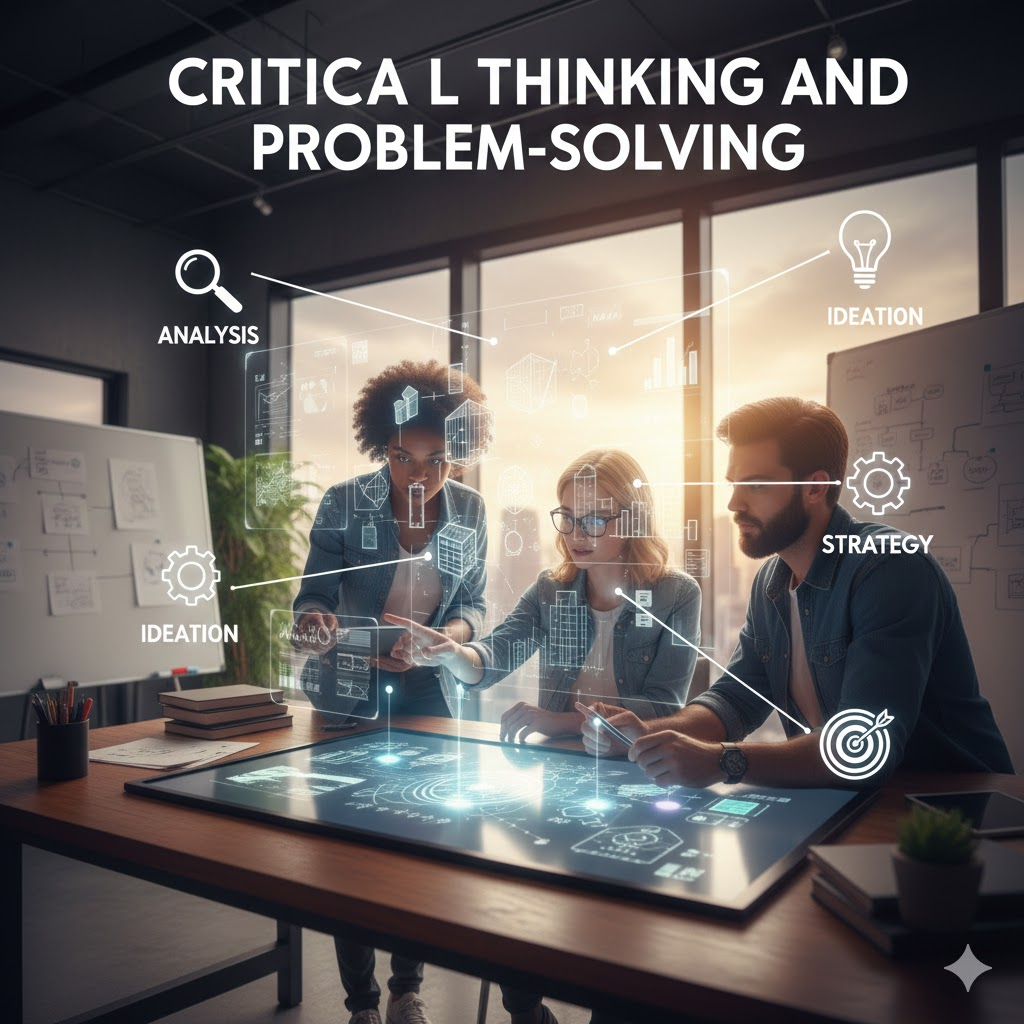
Critical thinking is the ability to analyze information objectively, evaluate evidence, and make reasoned decisions. It goes beyond memorizing facts—it involves questioning assumptions, recognizing biases, and understanding the logic behind ideas. For students, critical thinking is crucial for academic success, personal growth, and preparing for the real world.
Problem-solving is closely linked to critical thinking. It is the process of identifying challenges, brainstorming solutions, and taking effective action. Together, these skills allow students to approach situations logically, creatively, and confidently.
Why Critical Thinking and Problem-Solving Matter
- Academic Success:
Students with strong critical thinking skills perform better in assignments, essays, and exams because they can analyze questions, structure arguments, and provide evidence-based answers. - Decision-Making:
Life is full of choices. Critical thinkers evaluate options, consider consequences, and choose solutions that align with their goals. - Innovation and Creativity:
Problem-solving encourages thinking outside the box. Students learn to find multiple solutions rather than settling for the first idea. - Confidence in Challenges:
Facing new problems becomes less stressful. Students who develop these skills know how to break complex tasks into manageable steps.
Steps to Develop Critical Thinking and Problem-Solving Skills
1. Question Everything
- Ask why, how, and what-if.
- Challenge assumptions rather than accepting ideas at face value.
- Example: In history class, instead of memorizing events, ask why they happened and what the long-term consequences were.
2. Gather Reliable Information
- Collect evidence before forming conclusions.
- Use credible sources such as academic journals, books, and trusted websites.
- Example: When writing a research paper, cross-check facts from multiple sources.
3. Analyze and Evaluate Evidence
- Compare different viewpoints.
- Identify biases or errors in logic.
- Example: In a debate, critically examine your opponent’s arguments for strengths and weaknesses.
4. Brainstorm Solutions
- Use creativity to generate multiple options for solving a problem.
- Don’t settle for the first solution—consider alternatives.
- Example: If a group project is behind schedule, brainstorm ways to divide tasks efficiently or use technology to save time.
5. Make Reasoned Decisions
- Weigh pros and cons before acting.
- Consider both short-term and long-term outcomes.
- Example: Choosing a college major requires analyzing personal interests, career prospects, and academic strengths.
6. Reflect and Improve
- After solving a problem, reflect on what worked and what didn’t.
- Continuous improvement strengthens skills over time.
- Example: After an exam, review mistakes and analyze why you got certain questions wrong.
Practical Exercises for Students
- Daily Questioning Exercise:
- Pick a topic from your textbook.
- Ask five questions that go beyond memorization (why, how, what-if).
- Write down your answers and discuss with peers or teachers.
- Mind Mapping:
- Create a visual diagram of ideas, causes, and solutions for a problem.
- This helps organize thoughts logically and creatively.
- Scenario-Based Problem Solving:
- Take a real-life situation (e.g., managing study time, resolving group conflicts).
- List potential solutions, predict outcomes, and choose the best option.
- Debates and Discussions:
- Join school or online debate clubs.
- Practice forming arguments, defending your position, and evaluating opposing views critically.
- Brain Teasers and Logic Puzzles:
- Regularly solve puzzles, riddles, or strategy games.
- This trains the brain to think critically and approach problems methodically.
Tools and Resources to Enhance Critical Thinking
- Khan Academy & Coursera – Courses on logic, reasoning, and problem-solving.
- MindMeister & XMind – Mind mapping tools for organizing ideas visually.
- Lumosity & BrainBashers – Games and puzzles to enhance logical thinking.
- AI Research Assistants – Use tools like ChatGPT to explore multiple perspectives on complex topics.
Real-Life Example
Meet Rahul, a college student struggling to plan his schedule while managing assignments, part-time work, and extracurricular activities. Instead of panicking, he applied critical thinking:
- He listed all tasks and deadlines.
- Identified which tasks were urgent and important.
- Brainstormed ways to save time (group study, scheduling software, delegating tasks).
- Chose the best plan and executed it.
By analyzing his situation and solving the problem step by step, Rahul reduced stress and improved productivity. This example shows how critical thinking and problem-solving skills can make daily life manageable and efficient.
Skill 3: Time Management and Productivity
Time management is the ability to plan and control how you spend your hours to achieve goals efficiently. For students, managing time effectively can reduce stress, improve performance, and create space for learning, hobbies, and rest. Without proper time management, students often procrastinate, miss deadlines, and feel overwhelmed.

Key Techniques:
- Prioritization: Use tools like the Eisenhower Matrix to separate urgent and important tasks.
- Pomodoro Technique: Work in 25-minute focused intervals with 5-minute breaks to boost concentration.
- Scheduling: Maintain a daily planner or digital calendar to allocate time for classes, homework, and personal activities.
Practical Tips:
- Break large assignments into smaller tasks.
- Set specific, realistic goals for each study session.
- Avoid multitasking; focus on one task at a time for better results.
Tools for Productivity:
- Notion, Google Calendar, Trello – Plan tasks visually and track progress.
- Forest App – Encourages focused work by gamifying time management.
Example:
Riya, a college student, used time-blocking to manage studies, part-time work, and extracurricular activities. By allocating fixed hours for each task and following the Pomodoro technique, she completed assignments faster and reduced stress.
Daily Exercise:
At the start of each day, write down the top three tasks to complete. Review your progress at the end of the day.
Key Takeaway:
Time management isn’t just about doing more; it’s about doing what matters efficiently. Students who master this skill gain control over their schedule, improve productivity, and maintain a healthy balance between academics and personal life.
Skill 4: Digital Literacy
Digital literacy is the ability to use digital tools and technologies effectively, safely, and responsibly. In 2026, digital literacy is essential for students to excel in academics, collaborate online, and prepare for the workforce. It includes understanding software, navigating online resources, and protecting personal information.
Key Components:
- Basic Skills: Proficiency in MS Office, Google Suite, email, and online research.
- Advanced Skills: Coding basics, data analysis, content creation, and AI tool usage.
- Digital Safety: Understanding cybersecurity, privacy settings, and avoiding scams.
Practical Tips:
- Take online courses on coding, AI tools, and digital research platforms.
- Learn keyboard shortcuts, cloud storage management, and collaborative tools.
- Practice creating presentations, videos, or blogs to improve digital communication.
Tools to Enhance Digital Literacy:
- Coursera & Udemy – Learn digital skills through structured courses.
- Canva & Figma – Design graphics and presentations.
- Notion & Trello – Organize projects and collaborate online.
Example:
A student named Arjun created a blog using WordPress and Canva. By mastering digital tools, he not only showcased his academic projects but also built skills valuable for internships.
Daily Exercise:
Spend 30 minutes daily exploring new software or online tools. Practice using them for projects or personal tasks.
Key Takeaway:
Digital literacy empowers students to adapt to technology-driven environments. It enhances learning, creativity, and career readiness while ensuring students stay safe online.
Skill 5: Emotional Intelligence
Emotional intelligence (EQ) is the ability to recognize, understand, and manage your own emotions while empathizing with others. Unlike IQ, which measures cognitive ability, EQ impacts relationships, decision-making, and stress management. For students, high EQ improves communication, conflict resolution, and overall well-being.
Key Components:
- Self-awareness: Understanding your emotions and triggers.
- Self-regulation: Controlling impulses and managing stress effectively.
- Empathy: Recognizing and responding to others’ emotions.
- Social Skills: Building healthy relationships, teamwork, and collaboration.
Practical Tips:
- Practice mindfulness and reflection to increase self-awareness.
- Respond calmly during conflicts instead of reacting impulsively.
- Actively listen to peers and acknowledge their feelings.
Example:
Sana, a college student, noticed tension in her group project. By applying EQ—listening carefully, understanding perspectives, and mediating discussions—she resolved conflicts, improving teamwork and project outcomes.
Daily Exercise:
Keep an emotional journal. Write how you felt in different situations and how you responded. Reflect on improvements.
Key Takeaway:
Emotional intelligence helps students navigate personal and academic challenges. By developing EQ, students build resilience, improve relationships, and create a positive, supportive environment for themselves and others.
Skill 6: Creativity and Innovation
Creativity is the ability to generate original ideas, while innovation involves applying these ideas to solve problems or create value. For students, these skills encourage flexible thinking, problem-solving, and academic excellence. Creativity is not limited to art; it applies to science, writing, coding, and entrepreneurship.
Practical Tips:
- Mind Mapping: Organize ideas visually to spark new connections.
- Journaling: Write down ideas daily without judging them.
- Brainstorming: Collaborate with peers to explore multiple solutions.
- Experimentation: Try new methods or approaches in projects or learning.
Example:
Meera, a student, used creative thinking to design an eco-friendly school project. She combined recycled materials with technology to develop a unique solution, earning recognition for innovation.
Daily Exercise:
Spend 20 minutes brainstorming solutions for simple problems, like improving your study routine or organizing notes creatively.
Tools to Enhance Creativity:
- Canva & Adobe Spark – Visualize ideas.
- Notion & Miro – Organize thoughts and collaborate on creative projects.
- TED Talks & YouTube Learning – Gain inspiration from innovators worldwide.
Key Takeaway:
Creativity and innovation make students adaptable and resourceful. Regular practice develops new ideas, encourages problem-solving, and boosts confidence in applying knowledge creatively.
Skill 7: Leadership and Teamwork
Leadership is the ability to guide, inspire, and influence others, while teamwork involves collaborating effectively toward shared goals. Students who develop these skills are better prepared for academic projects, extracurricular activities, and future careers.
Practical Tips:
- Take initiative in group projects and extracurricular activities.
- Listen actively and respect all team members’ ideas.
- Build trust by being reliable and supportive.
- Learn to delegate tasks and recognize others’ strengths.
Example:
Rohan led his college tech club, organizing workshops and delegating responsibilities. By fostering teamwork and motivating peers, he successfully executed events and strengthened his leadership skills.
Daily Exercise:
Participate in team activities or student clubs. Reflect on your role—are you listening, contributing, and supporting others effectively?
Tools to Enhance Leadership and Teamwork:
- Slack & Trello – Organize team projects.
- Zoom & Google Meet – Facilitate remote collaboration.
- Leadership Podcasts & Books – Learn strategies from successful leaders.
Why skills are important for students to learn?
In today’s modern and competitive world, Skills for Students are just as important as academic knowledge. Education is no longer limited to memorizing textbooks or scoring high marks. Instead, it is about developing practical Skills for Students that prepare learners for real-life challenges, careers, and personal growth. Without strong Skills for Students, even the most knowledgeable students may struggle to apply what they have learned.
One of the biggest reasons Skills for Students are important is that they build confidence and independence. Communication, problem-solving, and decision-making Skills for Students help learners express their ideas clearly and handle responsibilities effectively. These Skills for Students also improve classroom participation, group discussions, and presentations.
Another key reason Skills for Students matter is career readiness. Employers today look for individuals who possess strong Skills for Students such as teamwork, adaptability, leadership, and digital literacy. Academic degrees may help students qualify for jobs, but Skills for Students help them succeed and grow in their careers.
Skills for Students are also essential for managing stress and emotions. Emotional intelligence and time management Skills for Students help learners cope with pressure, balance studies and personal life, and stay mentally healthy. These Skills for Students create resilience and a positive mindset.
Additionally, Skills for Students encourage creativity, innovation, and critical thinking. These Skills for Students allow learners to analyze problems, find solutions, and adapt to change in a fast-evolving world.
In conclusion, Skills for Students are the foundation of lifelong success. They shape personality, improve performance, and prepare students for the future. By learning and practicing essential Skills for Students, students can unlock their true potential and confidently face any challenge life presents.
Conclusion: Skills for Students Shape the Future
In conclusion, mastering the right Skills for Students is the key to building a successful and balanced life. While academic knowledge provides information, Skills for Students provide the ability to apply that knowledge effectively. Communication, adaptability, leadership, financial literacy, and research abilities together shape confident, capable individuals.
The true power of Skills for Students lies in their long-term impact. These skills improve employability, enhance personal relationships, and prepare students to face uncertainty with confidence. Students who focus on developing essential Skills for Students are better equipped to handle failures, embrace change, and seize opportunities.
What makes Skills for Students even more valuable is that they can be learned and improved at any stage. With daily practice, self-awareness, and consistency, students can transform their mindset and abilities. Small efforts made today toward improving Skills for Students can lead to massive success tomorrow.
Remember, marks may help you pass exams, but Skills for Students help you win in life. Start building these Skills for Students today, and you will be investing in a future that is confident, capable, and full of possibilities.